

Authenticating luxury jewelry is not a matter of finding a difference. It is a matter of understanding which differences matter. This case is a good example.
A customer came to our showroom to sell a single Van Cleef & Arpels Sweet Alhambra earring. It was one earring only, with no warranty card, so we had nothing to rely on except the piece itself, and we examined it closely.
It looked genuine, but the back did not match
The earring looked like the real thing. But the earring back, the small clutch that holds the earring in place, was different from the genuine ones we have in stock. Because the clutch was different, the weight was different as well.
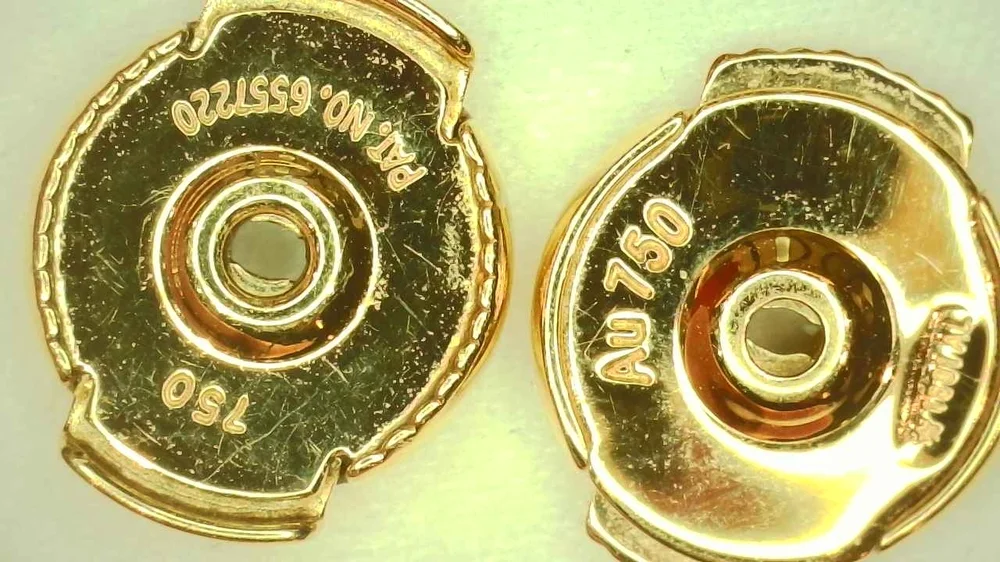
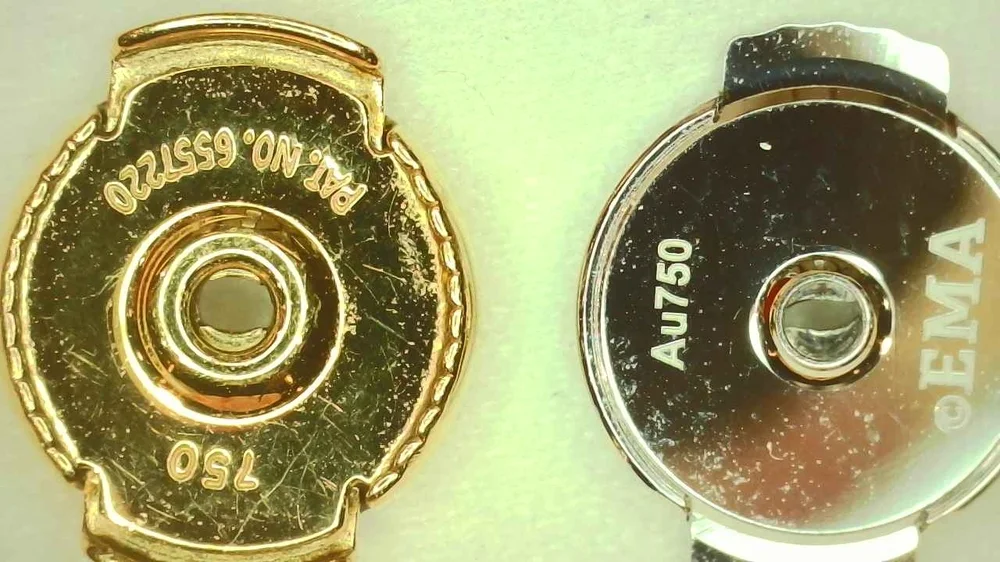
On the earring we examined, the back is stamped with a US patent number, PAT. NO. 6557220, together with the 750 gold mark. Our genuine pieces carry a different back with a different engraving.
What the research showed
So we researched the clutch itself. US patent 6,557,220, granted in 2003 under the title “Security clutch with self-centering spring,” belongs to an American company, B.A. Ballou & Co. In other words, this is a patented part made by an outside supplier, not something the jewelry house invented. Van Cleef & Arpels and Hermès have both used earring backs of this kind.
Hermès confirms it. Hermès has released earrings fitted with a back of exactly the same shape as the one we examined, and the back of a rose gold Hermès diamond earring carries the same stamp: PAT. NO. 6557220 and 750. So this back does not belong to one jewelry house alone. It appears on genuine pieces from more than one.
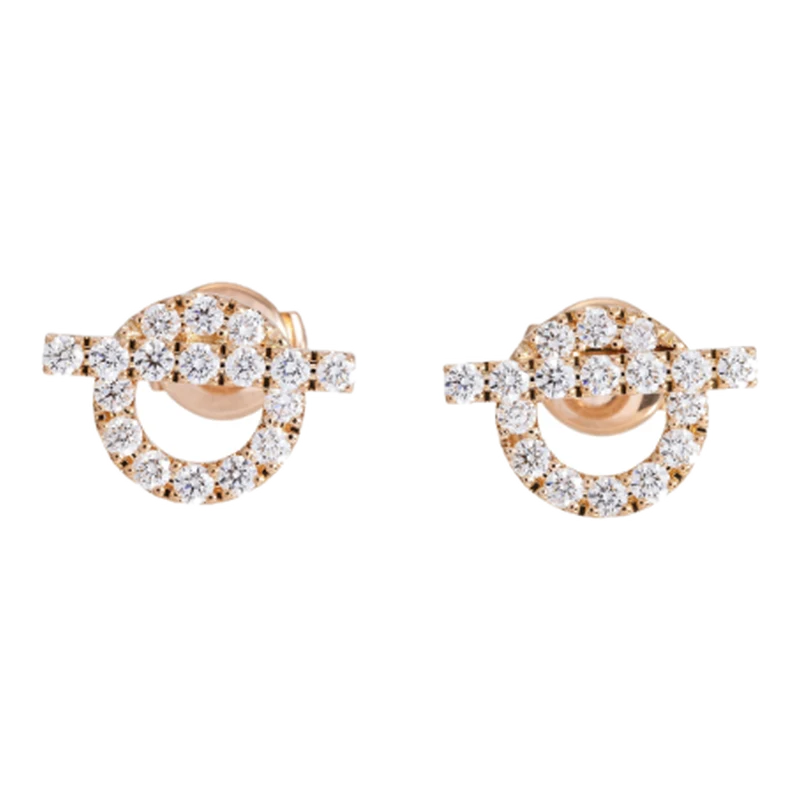
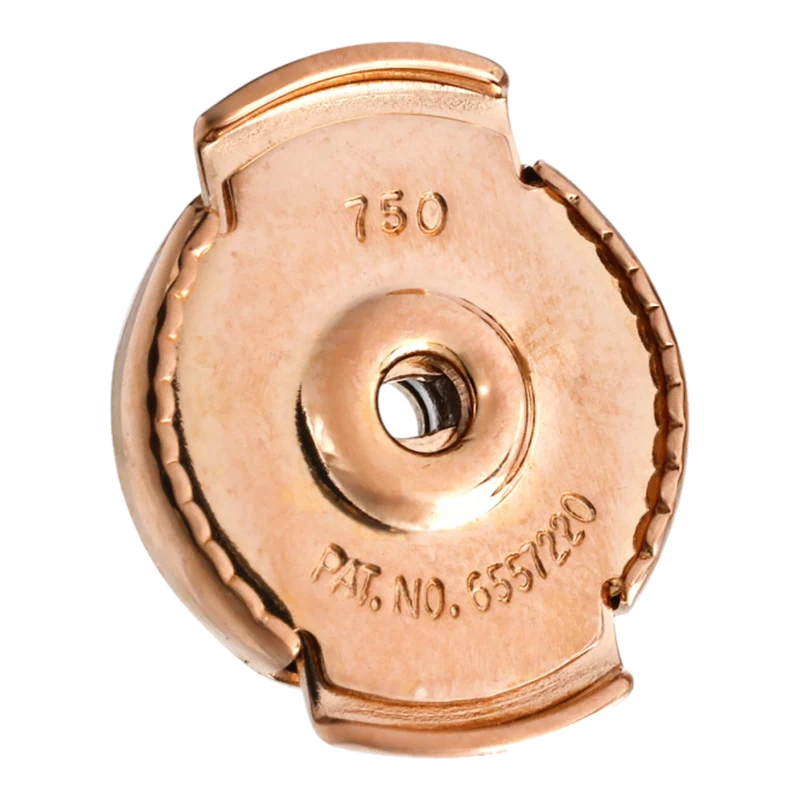
That raised a second question. The engraving on a Van Cleef & Arpels earring back changes from year to year, and this one was also slightly different in shape from the ones we know. That is exactly the kind of detail that makes an appraiser nervous.
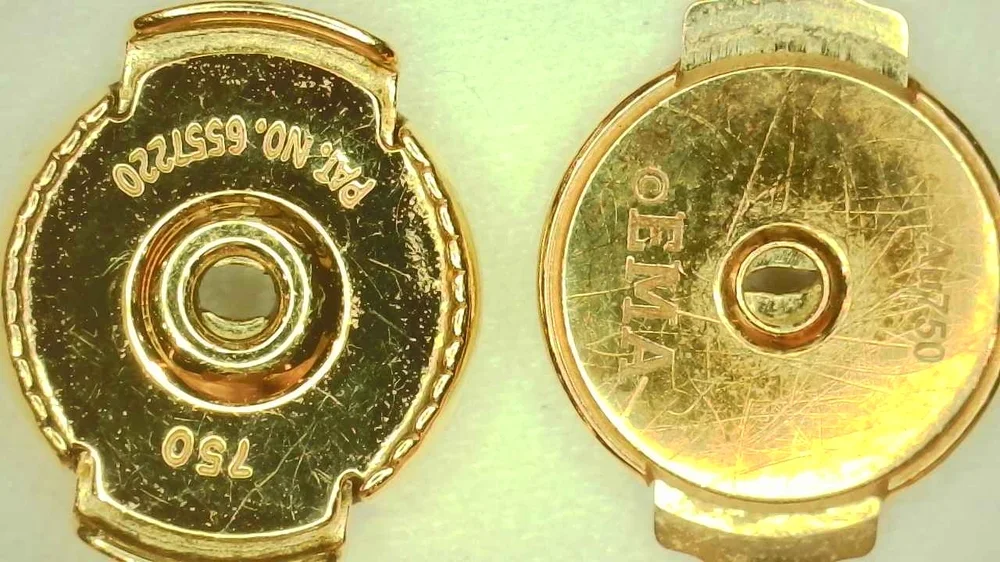
The answer was in our archive
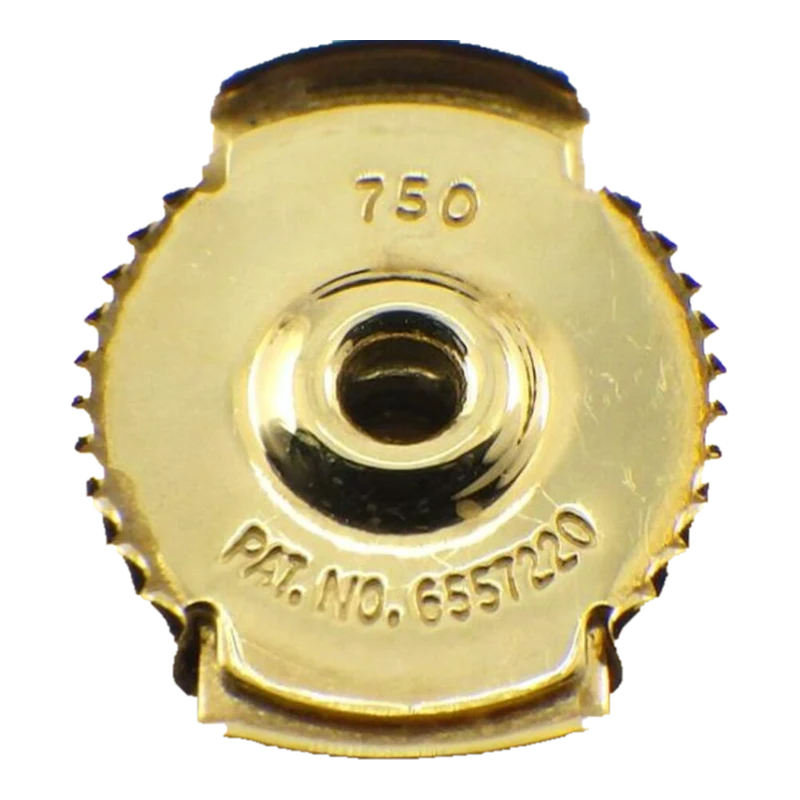
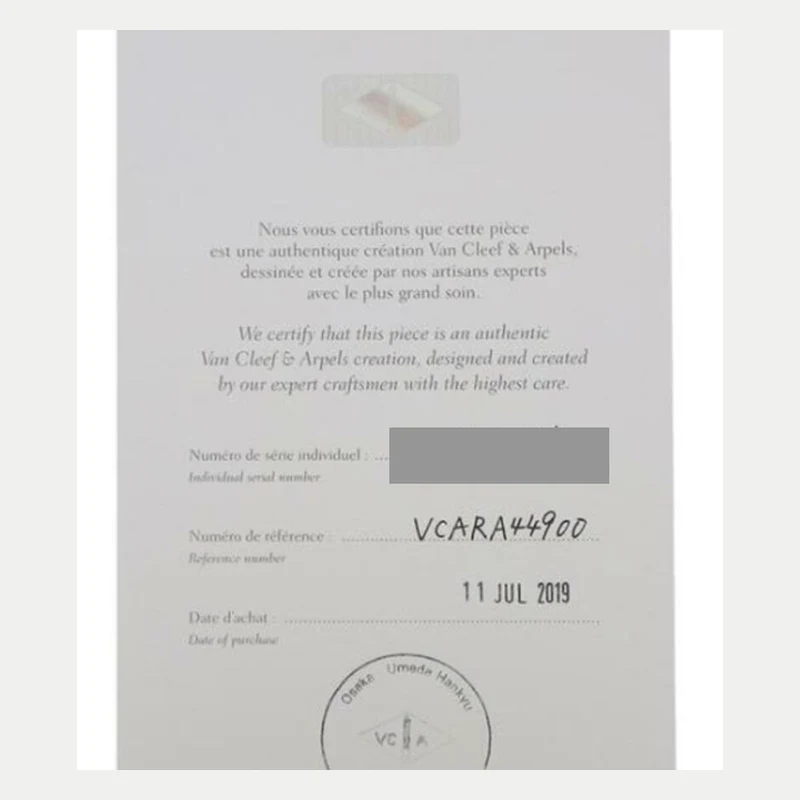
We went through our archive and found a full set from 2019, complete with its Van Cleef & Arpels certificate, that carries exactly the same earring back. That settled it. The piece was genuine.
In other words, Van Cleef & Arpels itself fitted this same back to its 2019 pieces.
Why this matters
Luxury jewelry has a great deal of variation. Parts change from year to year, and details vary from piece to piece. If every difference were treated as a sign of a fake, no one could authenticate anything, and many genuine pieces would be turned away.
The opposite is also true. When a piece looks exactly like the example in a reference book, it is easy to copy. Knowing that genuine pieces vary, and knowing which variations are real, is the harder skill.
That is why authenticating jewelry takes an archive. Only an expert who has handled and studied a wide range of genuine pieces, across years and across models, can tell a real variation from a fake. A single reference photo is not enough.
Our verification process
We examine the engravings, hallmarks, clasps and backs under magnification, compare them with genuine pieces and with our archive of full sets from different years, check the weight against reference values, and test the metal and the stones. When something does not match, we do not stop at “different.” We find out why.
Want to sell a genuine piece?
Even without a box or warranty card, we will examine your piece carefully and pay promptly if it is genuine.
We're at 336 Apgujeong-ro, Unit 109, Seoul. Please contact us at +82 10-8995-7062.
Have a question about your jewelry?
For authentication, buying, selling, or any other question about your jewelry, please reach out to us below.
Chat with an Expert