

When people check a Cartier piece, they usually compare it with what Cartier sells today. That works for a recent piece. For an older one it can point you in the wrong direction, because Cartier's engravings, marks and serial formats have changed over the years.
This is a Trinity ring that came in today. It was different from the current model, so we examined it carefully.
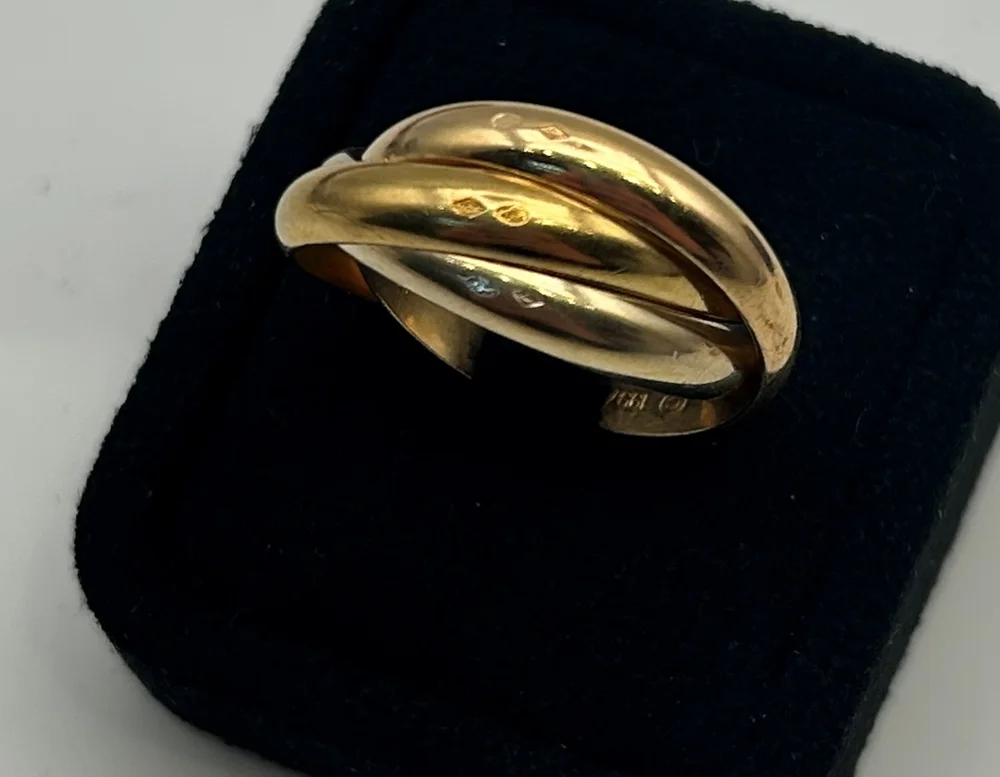
No Cartier name on the outside
Cartier still makes the large Trinity today. In the current product photos we compared, the Cartier name appears on the outside of the bands. The ring we examined has no Cartier name outside at all.
What it has instead are two small marks. One is an eagle's head, the French official assay mark for 18K (750) gold, applied after the French state assay office tests the metal. The other is a diamond-shaped workshop mark, which identifies the workshop that made the piece.
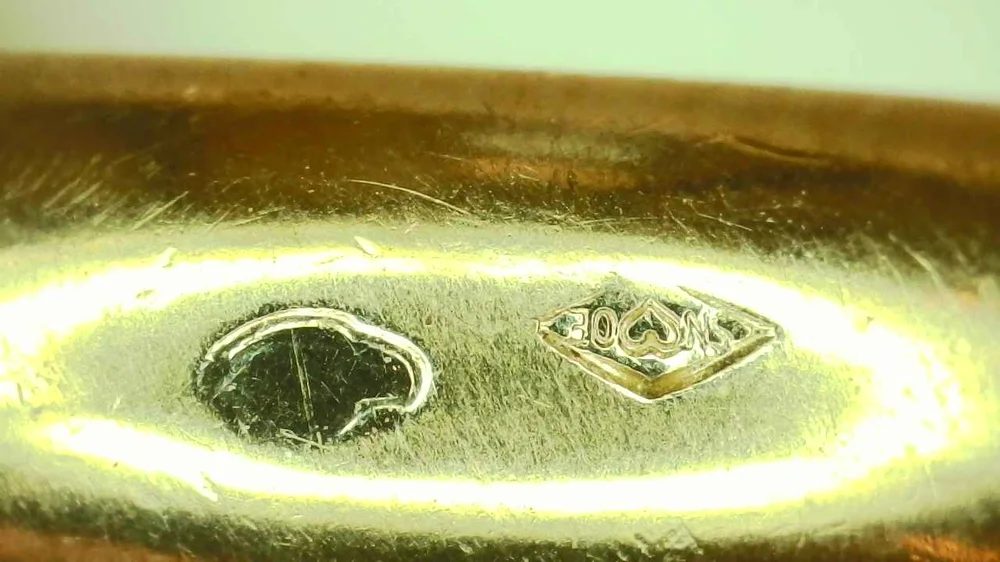
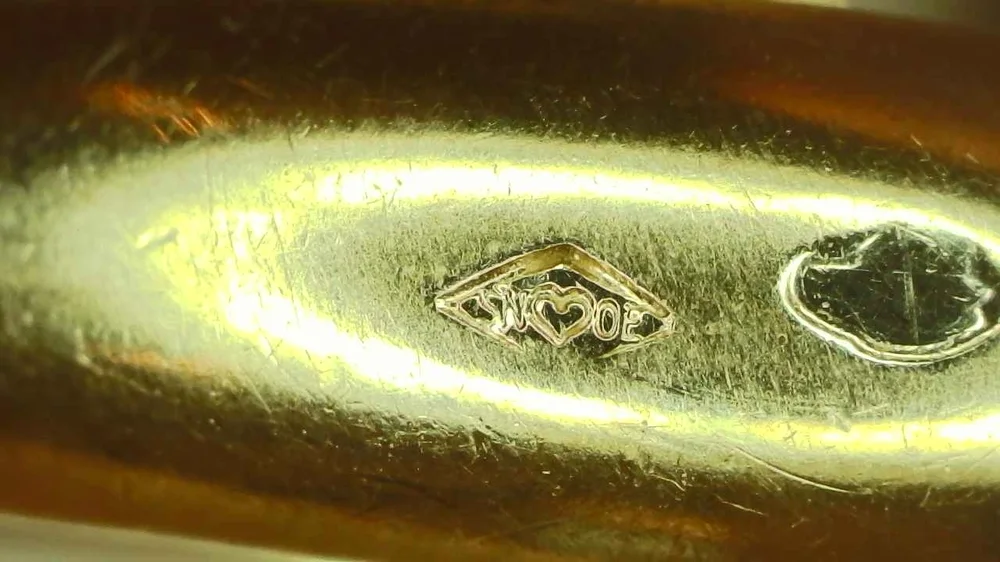
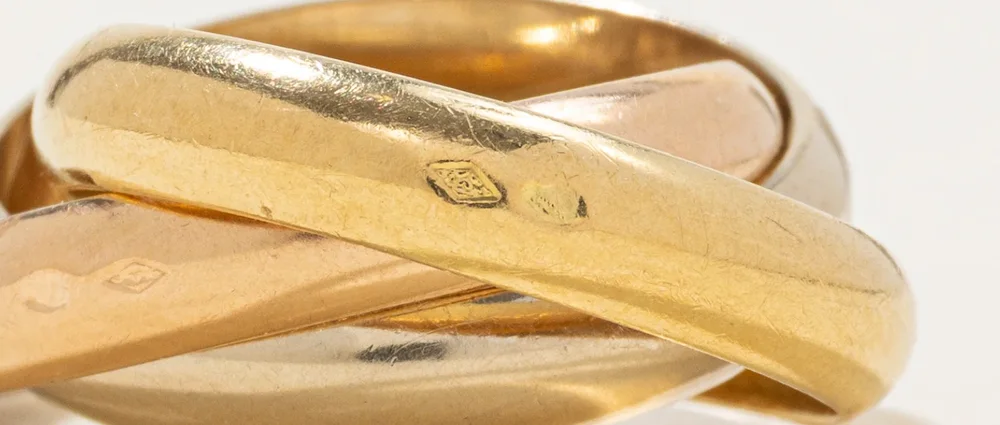
A genuine large Trinity from the same period that we found abroad looks the same from the outside: the same kind of marks, and no Cartier name on the outer face.
Inside: 750, Cartier, the size and a year
The Cartier name is on the inside of the band. There we find 750, the word Cartier in script, the ring size, and a copyright mark with the year 1997, followed by the serial number.
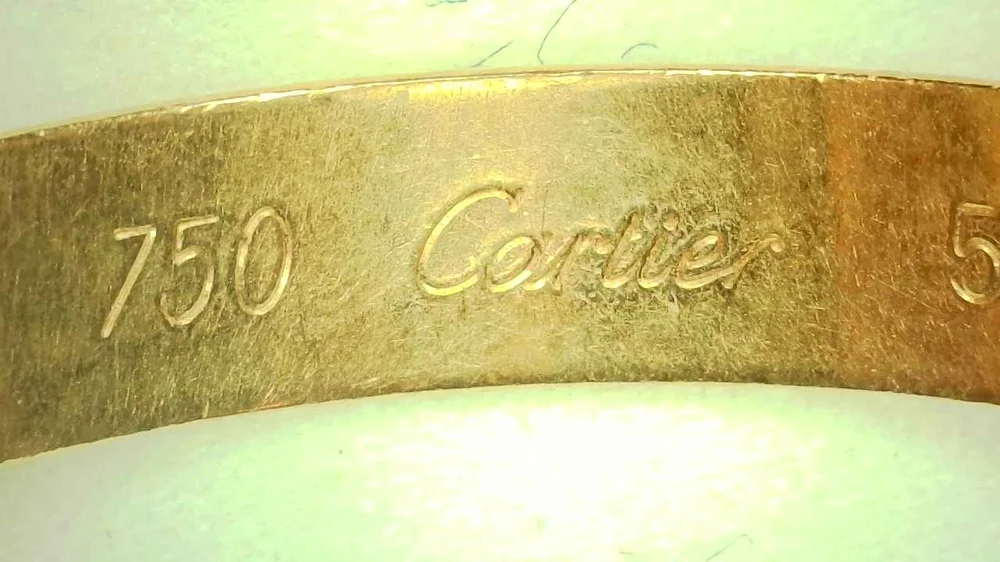
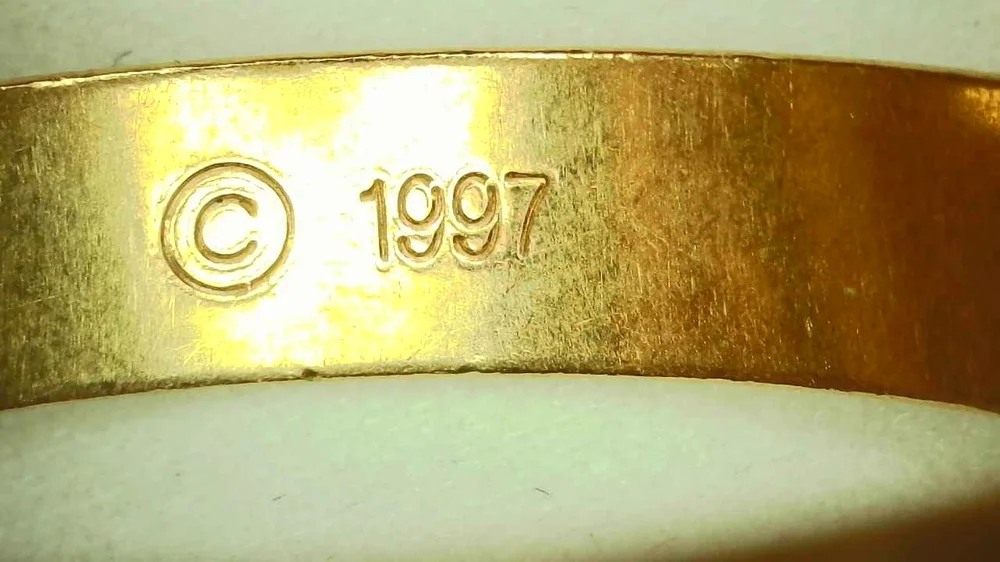
We read the year as pointing to the period the ring was made. The customer told us it was bought in Hong Kong in the 2000s. That fits what we see: a large Trinity made around 1997 that was still being sold from stock for some years afterward.
In fact, we found a ring engraved 1997 whose certificate shows a purchase date in 1998. A piece made in 1997 was not necessarily sold in 1997, so this is common.
Genuine examples abroad match
We looked for comparable pieces and found a genuine full set sold abroad, together with a Cartier certificate showing a purchase date in 1998. Its inside engraving follows the same pattern as the ring we examined.
The ring we examined: 750, Cartier, 59, © 1997. The genuine full set sold abroad: 750, Cartier, 52, © 1997. Only the size differs.
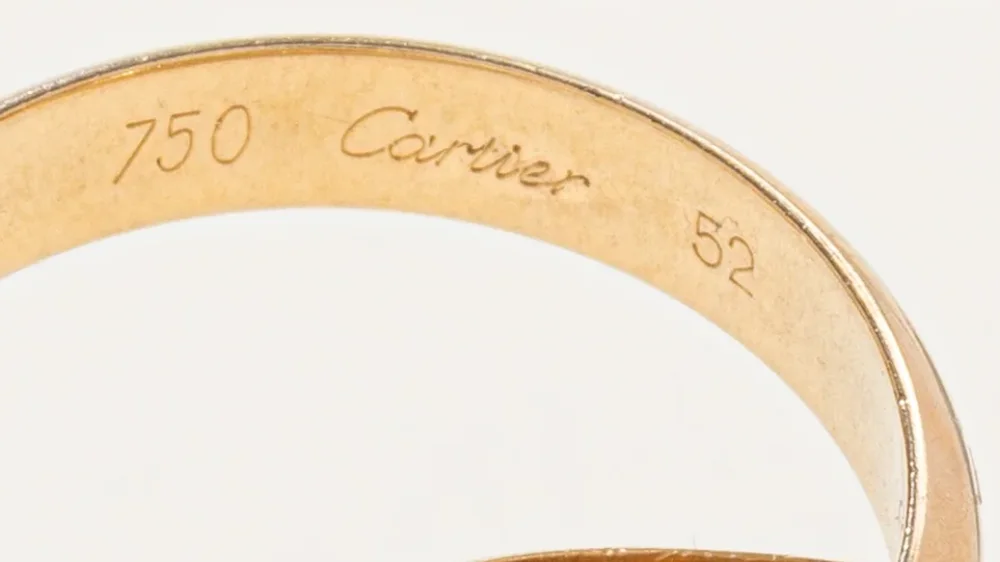
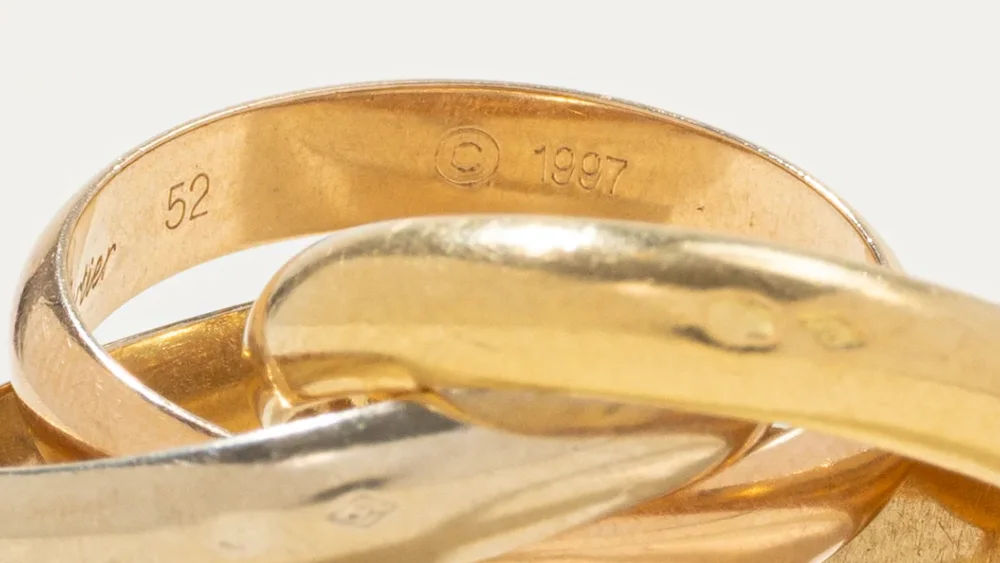
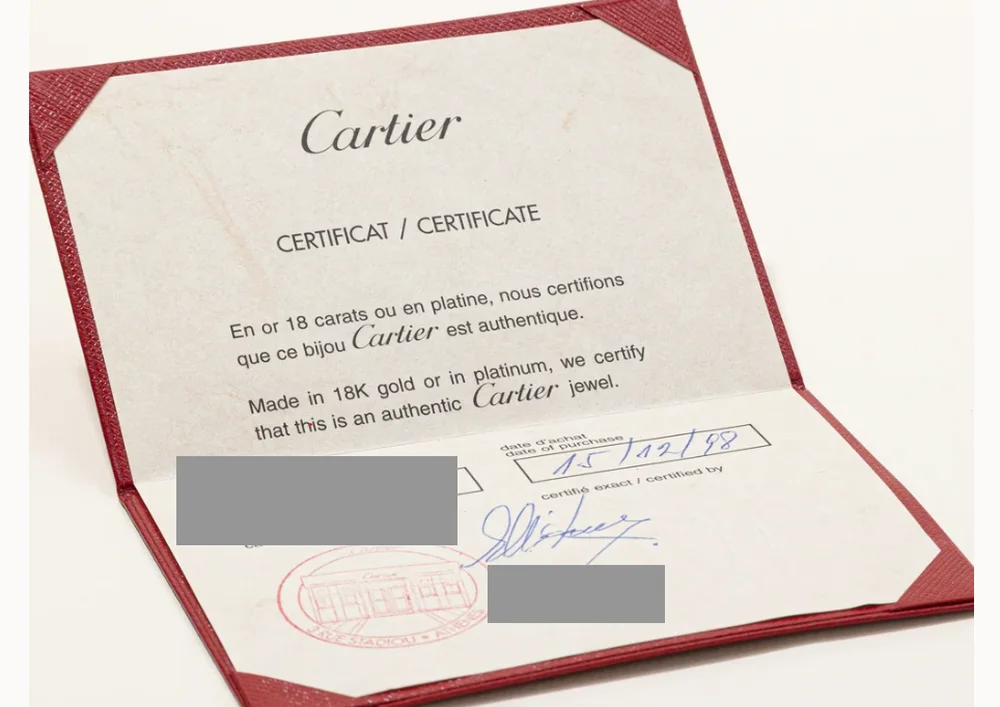
We also found overseas listings of large Trinity rings from the same era whose engravings, inside and out, are almost identical to the ring we examined. Together this settled it for us. The ring was consistent with a genuine piece from that period.
The serial did not look like today's either
A current Cartier serial is a single run of letters and digits. On this ring the serial has six characters, but they are not run together the way they are on a current piece: two letters, three digits, a gap, then one more letter.
A genuine large Trinity from the same period that we found abroad carries a five-character serial. So even within one model the serial format varied, and it has changed over time.
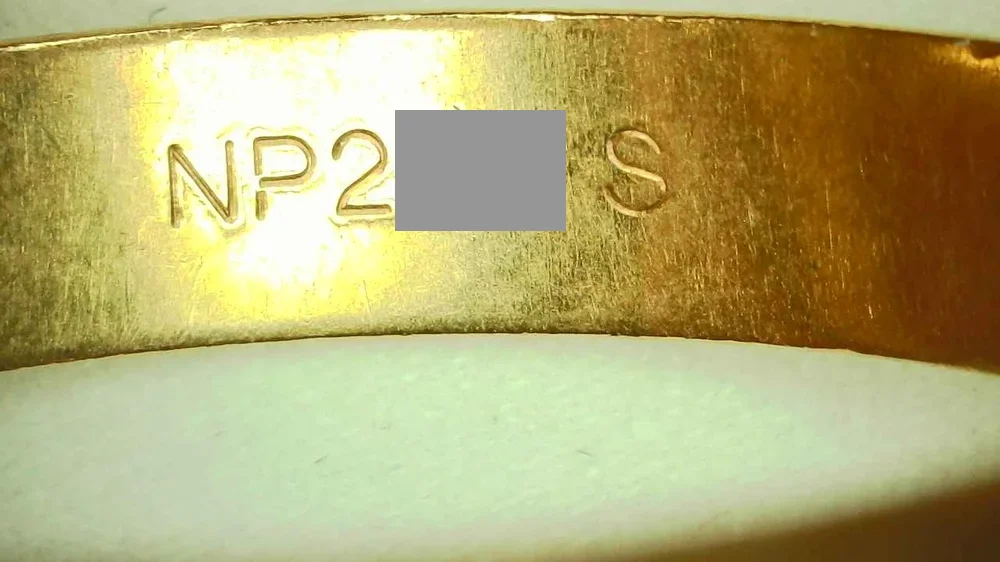
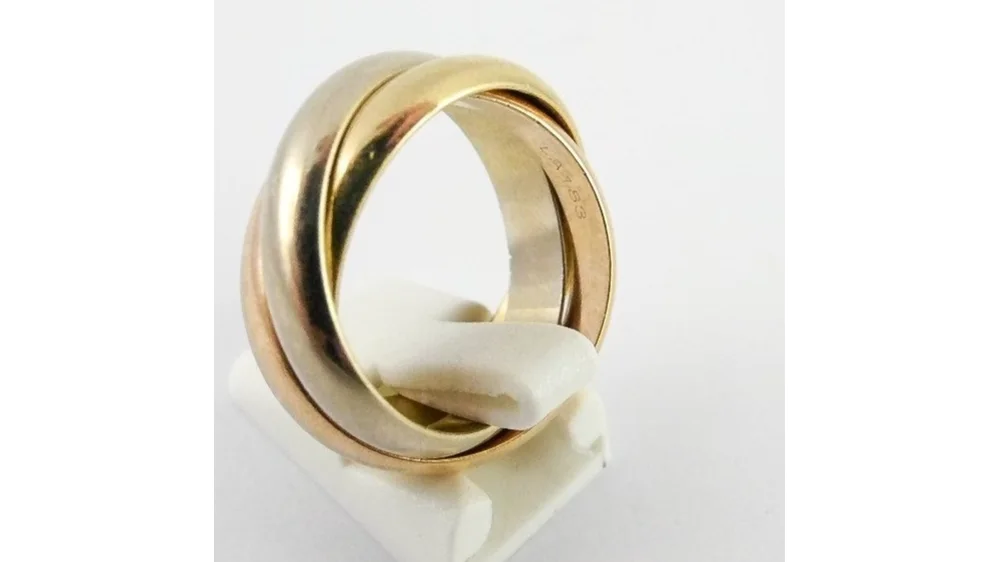
Another 1990s Trinity Classic, Another Engraving
The same day, another Trinity Classic from the 1990s came in. Its engraving also differs a great deal from what Cartier stamps today. It is not a fake. It is a difference between eras.
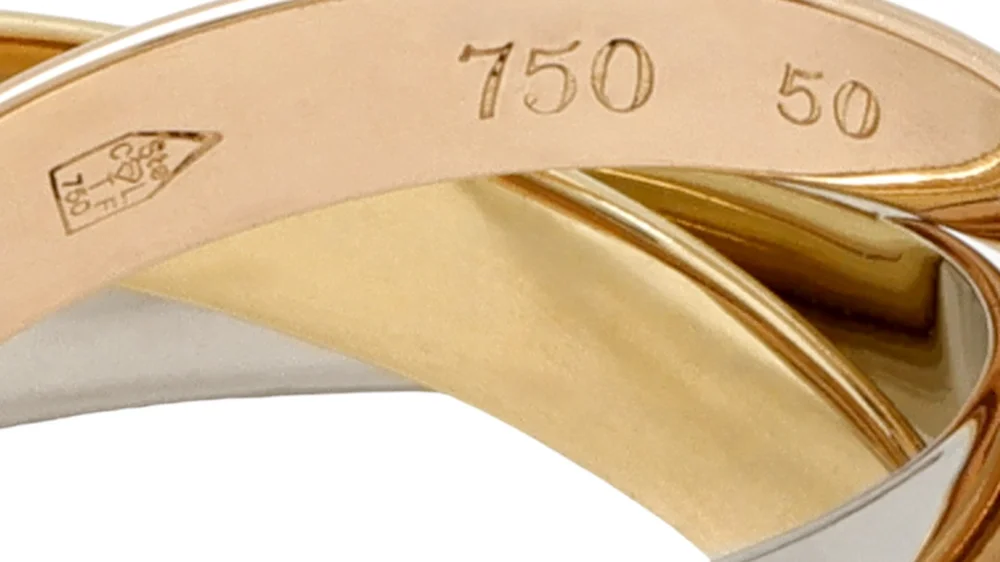
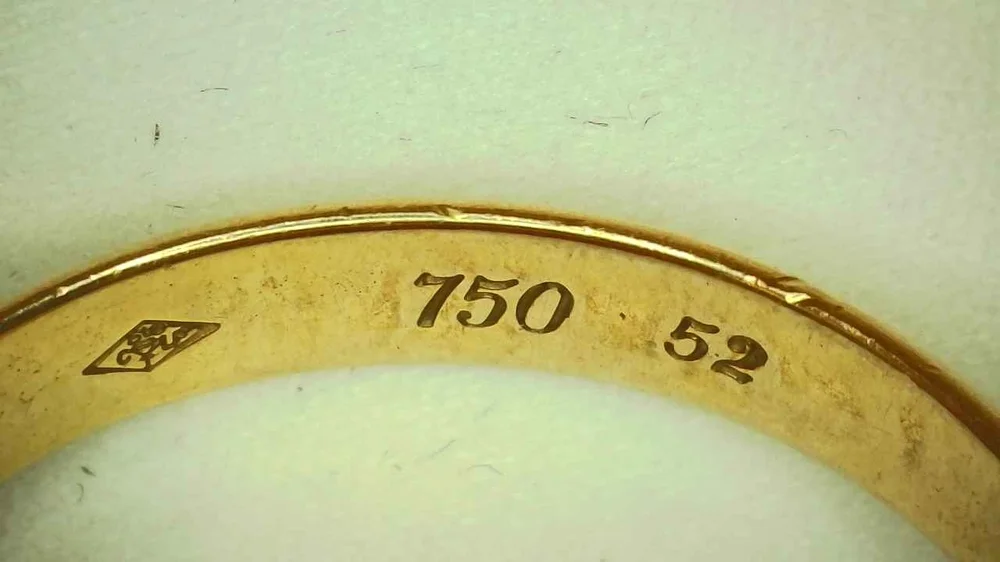
The workshop marks differ slightly in shape. But the lettering inside each mark is the same, which tells us they are marks of the same workshop. Marks of one workshop were not always cut in exactly the same form.
Why this matters
A difference from the current model is not proof of a fake. Cartier changed where the name is engraved, what is stamped on the outside, and how serials are written, and a piece made in 1997 follows the rules of 1997.
The opposite is also true. A piece that matches today's engravings perfectly is not automatically genuine, because today's engravings are easy to copy. What counts is whether the markings match what Cartier actually used in the year the piece was made.
That is why vintage Cartier takes an archive. You need genuine pieces from many years in front of you to know which markings belong to which period.
Our verification process
We examine every hallmark, workshop mark, engraving and serial under magnification, compare them with genuine pieces and with certificates from the same period, check the weight and test the metal. When something does not match the current model, we do not stop at “different.” We work out which period the piece belongs to.
Want to sell vintage Cartier jewelry?
Even without a box or certificate, we will examine your piece carefully and pay promptly if it is genuine.
We're at 336 Apgujeong-ro, Unit 109, Seoul. Please contact us at +82 10-8995-7062.
Have a question about your jewelry?
For authentication, buying, selling, or any other question about your jewelry, please reach out to us below.
Chat with an Expert